Maximizing Pinterest Keywords: A Guide for Artists

You may have heard me talking about how Pinterest is a great platform for artists to use. One reason that I love Pinterest for artists is because when people are visiting Pinterest, they are usually searching for something. This means people are coming to the platform looking for something specific, hopefully pictures of your art! Pinterest is one big visual google-machine and you get to populate it yourself. This serves a very different function compared to potential clients idly scrolling on Instagram.
Understand the Importance of Keywords:
Pinterest serves as a powerhouse platform for artists looking to expand their audience and connect with potential clients who are searching for home decor inspiration. To leverage Pinterest effectively, understanding how to utilize keywords is essential. Let’s delve into strategies tailored specifically for artists to enhance their visibility and reach on Pinterest.
Just like hashtags on social media platforms, keywords on Pinterest play a pivotal role in helping users discover relevant content. Keywords act as a bridge between your artwork and potential clients searching for art for their living spaces.
Identify Your Target Audience:
First, you must have already identified your ideal client. This is an important step before you approach marketing your artwork. You may have a tendency to start very broad here, like “anyone with lots of money is my client”, but this is not accurate! I’ll give an example of an ideal client target that is far more specific, and likely to be accurate for many of my clients:
My ideal client is a woman who appreciates quality goods and likes to surround herself with beautiful things. As such, she often invests in high quality footwear and clothing. She is an empty nester who has entertains in her home often, so she likes to have up-to-date home decor. She follows trends but needs to fit new acquisitions into her already beautiful home full of nice things. Her decor is neutral but she loves to have artwork that ‘tells a story’ and can act as a conversation piece in her home. While the sofa might be a neutral colour, she likes to use throw pillows that have similar colours of her artwork.
Research Stage: Consider what your idea client would be searching for
Start by typing in broad keywords related to your artwork, such as "statement art," "landscape paintings," or "abstract canvas paintings." Pinterest’s autocomplete feature will provide suggestions for related keywords that users frequently search for.
Browse through Pinterest’s categories and trending topics to identify popular themes and keywords relevant to your artwork niche. Pay attention to seasonal trends and upcoming holidays, as they can influence keyword popularity.
Analyze Competitor Pins and take inspiration from successful artists and competitors within your niche. Analyze their pins to identify the keywords they use and incorporate similar ones into your pin descriptions.
Optimize Pin Descriptions:
Once you’ve identified relevant keywords, strategically incorporate them into your pin descriptions. Ensure that your descriptions are concise, descriptive, and engaging while seamlessly integrating targeted keywords. Avoid keyword stuffing*, as it can detract from the user experience.
Utilize Pinterest Ads for Keyword Insights:
Artists can leverage Pinterest’s advertising platform to gain valuable insights into keyword popularity and search volume. By setting up a campaign and accessing keyword suggestions, artists can refine their keyword strategy and maximize their reach on Pinterest.
A Squarespace/Pinterest Time Saver
Did you know you can enable a Pinterest button on your own website to save time in posting!?

First, toggle Pinterest Save Buttons to ON. You can decide which icon pops up on your site, and where.
Every time you (or your website visitor) hovers over a picture on your website, you’ll see the little Pinterest icon show up, and this allows people to easily save to their Pinterest boards. Although we hope that potential clients will be using this feature, I find it a very helpful time-saver to populate my own Pinterest boards with content that links back to my website.
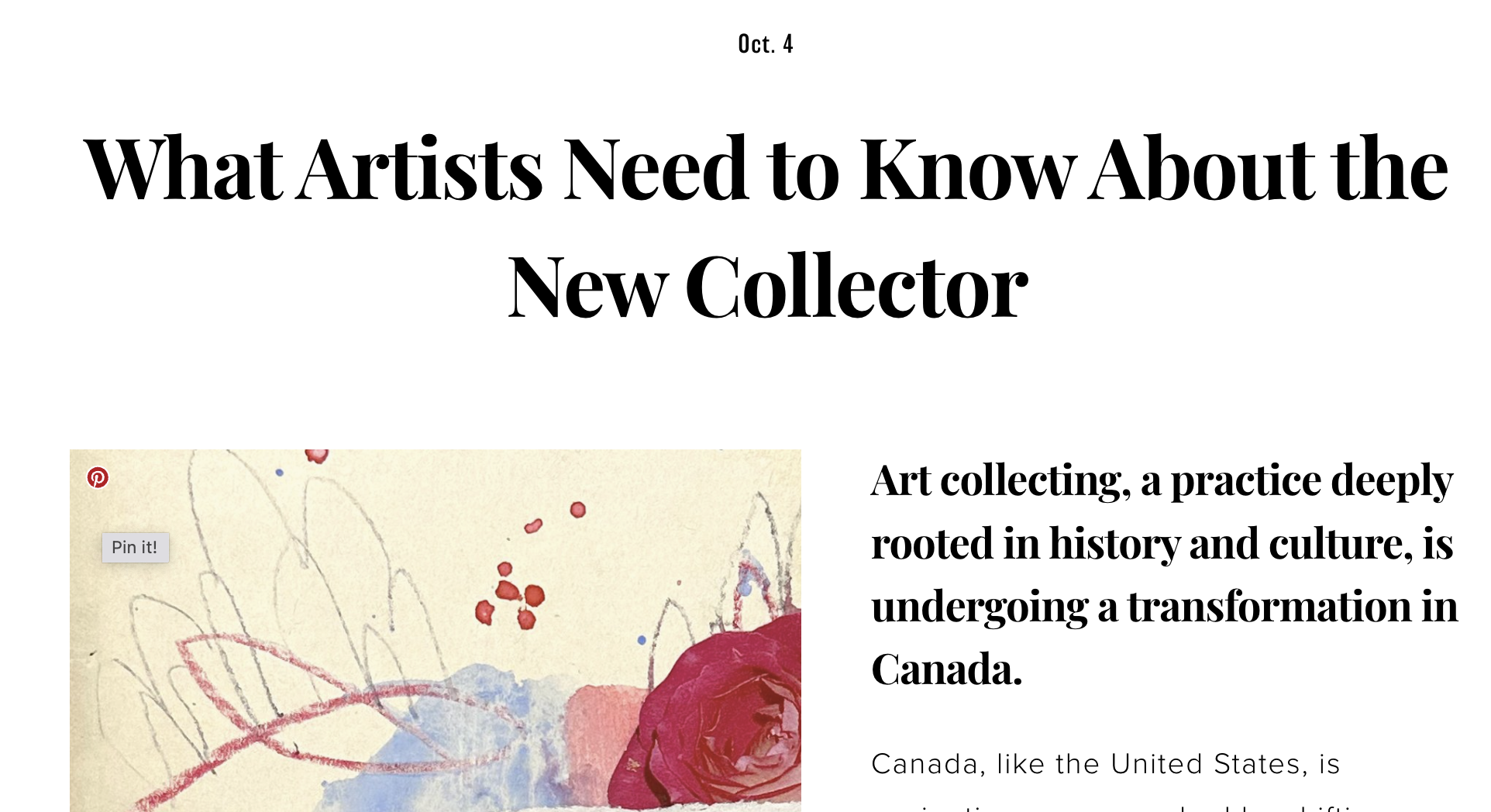
When you use the ‘Pin It!’ button, a post gets created in Pinterest that includes data from the original post, and links the viewer back to your website.
-
Some suggestions here, but these will need to be optimized for your specific niche and ideal buyer:
#HomeDecor
#InteriorDesign
#ArtForHome
#WallArt
#ArtPrints
#GalleryWall
#HomeStyling
#DecorInspiration
#ModernArt
#ContemporaryArt
#AbstractArt
#BotanicalArt
#ScandinavianDesign
#BohemianDecor
#CoastalDecor
#FarmhouseStyle
#EclecticHome
#MinimalistArt
#VintageArt
#RusticDecor
-
Again, these need to be altered for your own niche and medium:
#OilPainting
#WatercolourArt
#AcrylicPainting
#DigitalArt
#PortraitArt
#LandscapePainting
#AbstractExpressionism
#Impressionism
#GeometricArt
#NatureArt
In conclusion, if you’re going to put the effort into posting on Pinterest, it’s worth your time to put some effort into keywords. I look forward to seeing what you come up with!
-
Keyword stuffing is a practice used in search engine optimization (SEO) where webmasters or content creators excessively repeat specific keywords or phrases in an attempt to manipulate a website's ranking in search engine results. This technique involves inserting keywords or phrases unnaturally into content, often making it repetitive and less readable for users.
While the intent behind keyword stuffing is to boost a page's visibility on search engine results pages (SERPs), search engines like Google have become sophisticated in recognizing and penalizing such tactics. Keyword stuffing is considered a black hat SEO technique and is against search engine guidelines.
Some examples of keyword stuffing include:
Repeating the same keyword or phrase multiple times within a paragraph or piece of content.
Adding irrelevant keywords or phrases to a webpage's metadata or hidden text.
Listing keywords repeatedly at the bottom of a webpage.
Using font colours or styles that make keywords invisible to human readers but still detectable by search engine crawlers.
Engaging in keyword stuffing can result in a website being penalized by search engines, leading to a decrease in rankings or even removal from search results altogether. Instead, it's recommended to focus on creating high-quality, user-friendly content that naturally incorporates relevant keywords in a way that enhances the user experience.